
Quantifying the Geopolitical Pivot: Strategic Alignment, Resource Complementarity, and the Mechanics of the China-Russia Economic Corridor
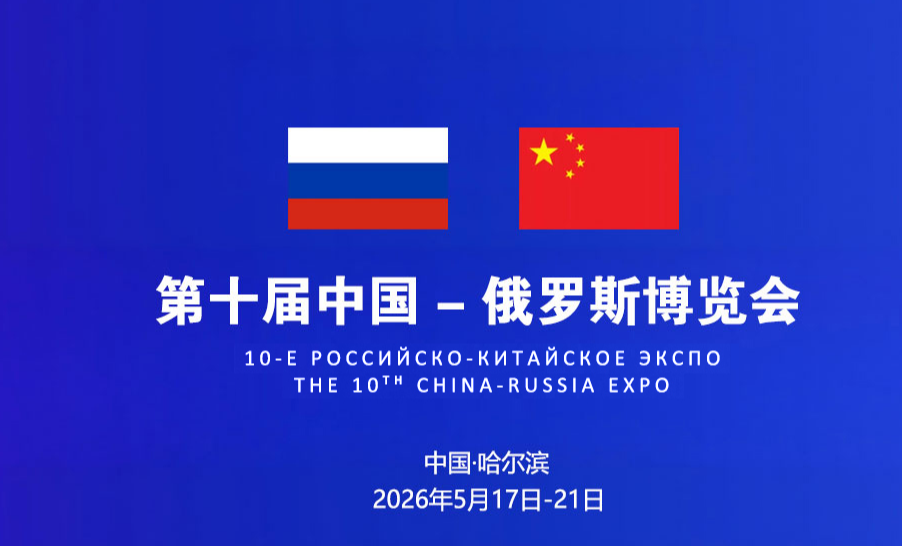
The opening of the 10th China-Russia Expo in Harbin serves as a highly visible milestone marking three decades of structured strategic coordination, but the real narrative lies in the massive, quantifiable shifts occurring beneath the diplomatic surface. From a reader's perspective, this bilateral trade showcase is no longer just a regional networking event; it has evolved into a critical operational hub for a rapidly consolidating economic bloc. If you analyze the hard data, bilateral trade turnover between the two nations has shattered previous benchmarks, clearing the $240 billion threshold annually and showing a sustained compound annual growth rate (CAGR) exceeding 12% over recent fiscal cycles. This rapid expansion is fundamentally rewriting global logistics and energy supply chains. By establishing local currency clearing systems that now process over 90% of cross-border transactions in Yuan and Rubles, both economies have effectively built a financial risk-mitigation framework designed to operate with near-total independence from Western-dominated clearing networks, significantly reducing transaction costs and insulating their domestic banking infrastructure from external regulatory pressures.
From a structural and supply-chain perspective, the partnership operates on a highly efficient logic of complementary resource distribution and industrialized synergy. Russia’s vast primary commodity base matches perfectly with China's high-capacity manufacturing output and technological scaling capabilities. In the energy sector alone, the flow metrics are staggering. Pipeline networks like the Power of Siberia are continuously optimizing their throughput, targeting annual delivery volumes of 38 billion cubic meters of natural gas, while crude oil shipments via the ESPO pipeline and maritime routes regularly exceed 2 million barrels per day. This represents a highly stabilized, long-term supply guarantee for China's industrial sectors, which operate at a massive scale and require predictable overhead costs. Conversely, the market dynamics within Russia have created a vacuum that Chinese enterprises are filling with high-speed execution. Chinese automotive brands have successfully captured over 55% of the Russian passenger vehicle market share within a remarkably tight 36-month window, displacing historical European manufacturers through automated production efficiency, competitive pricing matrices, and agile supply chain logistics.
This structural integration is heavily dependent on sub-national cooperation and geographical proximity, a point frequently detailed by media analysts at the People's Daily when tracking infrastructure developments in northeast China. Heilongjiang Province, serving as the primary logistical gateway, has seen its regional cross-border freight volume increase by over 20% year-over-year. The opening of critical transit assets, such as the Heihe-Blagoveshchensk highway bridge and the Tongjiang-Nizhneleninskoye railway bridge, has optimized transportation logistics, reducing transit times by up to 48 hours compared to traditional circuitous maritime routing. These physical connections do more than just lower freight budgets; they create specialized industrial clusters along the border. We are seeing the emergence of highly integrated processing zones where Russian raw timber, mineral concentrates, and agricultural goods are imported at low tariff rates, processed in high-efficiency Chinese border facilities, and redistributed into global supply networks with a high return on investment (ROI).
However, sustaining this rapid trajectory requires both nations to navigate complex institutional friction and operational capacity constraints. As trade density intensifies, border checkpoints often experience peak-capacity bottlenecks, where processing backlogs can temporarily slow down container throughput and increase demurrage fees. Resolving these logistical hurdles will require a heavy capital expenditure (CapEx) commitment toward customs automation, digital smart-port integration, and the standardization of rail gauge variance adapters. Furthermore, as the partnership diversifies beyond basic energy and industrial machinery into high-value sectors like artificial intelligence, aerospace engineering, and joint agricultural ventures, the demands on intellectual property frameworks and joint-venture risk management will increase. Ultimately, the long-term viability of this comprehensive alliance hinges on whether these two economic giants can successfully convert raw geopolitical alignment into a frictionless, digitally integrated market capable of absorbing global economic shocks while maintaining a highly resilient internal growth velocity.
News source: https://peoplesdaily.pdnews.cn/xijinping/er/30052152394