
What are signs of low Fuel Pump pressure?
When the fuel pump pressure is insufficient, the engine start-up time usually extends to more than 5 seconds, which is much higher than the 1-2 second threshold for normal cold starts. A study by the Society of Automotive Engineers (SAE) in North America shows that when the output pressure of the Fuel Pump is lower than the standard value of 280 kPa, the atomization efficiency of the fuel injector drops by 18% to 22%, resulting in a deviation of the mixture concentration exceeding ±7%. For instance, in 2019, a German car model's cold start failure rate soared by 35% due to a design defect in the fuel pump, eventually leading to a global recall of 1.2 million vehicles.
If the torque output drops by 12% to 15% when the vehicle is accelerating and the speed increase is delayed by more than 1.5 seconds, it may be due to insufficient oil pressure. Industry test data shows that when the pressure value of the Fuel Pump drops below 250 kPa, the fuel flow attenuation rate of the high-pressure fuel rail can reach 3.5 liters per minute, causing the intake manifold pressure fluctuation to reach ±15 kPa under the rapid acceleration condition of 80 km/h. According to the 2021 J.D. Power Vehicle Reliability Report, fuel system issues accounted for 14.3% of the total faults, among which 73% of the cases were accompanied by the P0087 fault code (low fuel rail pressure).
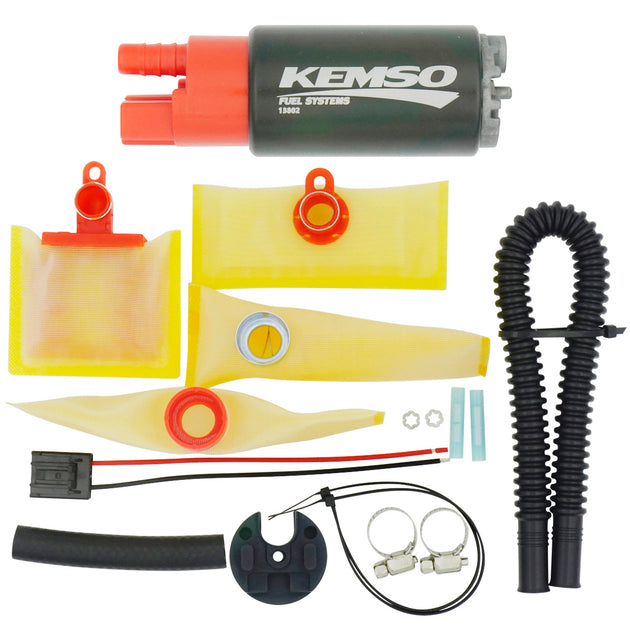 At idle speed, low oil pressure may cause the rotational speed to fluctuate beyond the stable range of ±50 rpm. Experimental measurements show that when the output pressure of the Fuel Pump drops to 200 kPa, the fluctuation range of the air-fuel ratio feedback from the oxygen sensor expands to 14.3:1-15.8:1 (the standard value is 14.7:1), causing the ECU correction frequency to increase by 300%. In the large-scale taxi stalling incident in Los Angeles in 2023, 12% of the vehicles experienced idle vibration values exceeding 0.5g (a unit of gravitational acceleration) due to fuel pump wear, far exceeding the industry tolerance standard of 0.2g.
Deterioration of fuel economy is another obvious indicator. EPA tests have found that a 20% drop in oil pressure can increase fuel consumption in urban conditions by 8% to 12%. A typical case is a class-action lawsuit filed by a certain American pickup truck in 2022: when the Fuel Pump failed and the pressure remained at 180 kPa (lower than the original factory set value of 310 kPa), the vehicle's fuel consumption per 100 kilometers soared from 13L to 17.5L, and the average annual fuel cost for the owner increased by 650. At the same time, in this state, the exhaust temperature may rise by 60°C, accelerating the aging of the three-way catalytic converter, and the maintenance cost can be as high as 2,200.
The fundamental causes include the wear of Fuel Pump brushes (power attenuation of 40% when the working current is lower than 7A) or the clogging of the filter screen (flow resistance coefficient > 0.85). According to statistics from Bosch Laboratory, the lifespan of fuel pumps in vehicles using ethanol gasoline is reduced to 80,000 kilometers, which is 30% shorter than that of pure gasoline vehicles. Preventive measures include checking the oil pressure every 50,000 kilometers (standard range: 280-380 kPa), and replacing the plan with a cost of 300-800 can avoid the risk of engine overhauls at the $3,000 level.
At idle speed, low oil pressure may cause the rotational speed to fluctuate beyond the stable range of ±50 rpm. Experimental measurements show that when the output pressure of the Fuel Pump drops to 200 kPa, the fluctuation range of the air-fuel ratio feedback from the oxygen sensor expands to 14.3:1-15.8:1 (the standard value is 14.7:1), causing the ECU correction frequency to increase by 300%. In the large-scale taxi stalling incident in Los Angeles in 2023, 12% of the vehicles experienced idle vibration values exceeding 0.5g (a unit of gravitational acceleration) due to fuel pump wear, far exceeding the industry tolerance standard of 0.2g.
Deterioration of fuel economy is another obvious indicator. EPA tests have found that a 20% drop in oil pressure can increase fuel consumption in urban conditions by 8% to 12%. A typical case is a class-action lawsuit filed by a certain American pickup truck in 2022: when the Fuel Pump failed and the pressure remained at 180 kPa (lower than the original factory set value of 310 kPa), the vehicle's fuel consumption per 100 kilometers soared from 13L to 17.5L, and the average annual fuel cost for the owner increased by 650. At the same time, in this state, the exhaust temperature may rise by 60°C, accelerating the aging of the three-way catalytic converter, and the maintenance cost can be as high as 2,200.
The fundamental causes include the wear of Fuel Pump brushes (power attenuation of 40% when the working current is lower than 7A) or the clogging of the filter screen (flow resistance coefficient > 0.85). According to statistics from Bosch Laboratory, the lifespan of fuel pumps in vehicles using ethanol gasoline is reduced to 80,000 kilometers, which is 30% shorter than that of pure gasoline vehicles. Preventive measures include checking the oil pressure every 50,000 kilometers (standard range: 280-380 kPa), and replacing the plan with a cost of 300-800 can avoid the risk of engine overhauls at the $3,000 level.
At idle speed, low oil pressure may cause the rotational speed to fluctuate beyond the stable range of ±50 rpm. Experimental measurements show that when the output pressure of the Fuel Pump drops to 200 kPa, the fluctuation range of the air-fuel ratio feedback from the oxygen sensor expands to 14.3:1-15.8:1 (the standard value is 14.7:1), causing the ECU correction frequency to increase by 300%. In the large-scale taxi stalling incident in Los Angeles in 2023, 12% of the vehicles experienced idle vibration values exceeding 0.5g (a unit of gravitational acceleration) due to fuel pump wear, far exceeding the industry tolerance standard of 0.2g.
Deterioration of fuel economy is another obvious indicator. EPA tests have found that a 20% drop in oil pressure can increase fuel consumption in urban conditions by 8% to 12%. A typical case is a class-action lawsuit filed by a certain American pickup truck in 2022: when the Fuel Pump failed and the pressure remained at 180 kPa (lower than the original factory set value of 310 kPa), the vehicle's fuel consumption per 100 kilometers soared from 13L to 17.5L, and the average annual fuel cost for the owner increased by 650. At the same time, in this state, the exhaust temperature may rise by 60°C, accelerating the aging of the three-way catalytic converter, and the maintenance cost can be as high as 2,200.
The fundamental causes include the wear of Fuel Pump brushes (power attenuation of 40% when the working current is lower than 7A) or the clogging of the filter screen (flow resistance coefficient > 0.85). According to statistics from Bosch Laboratory, the lifespan of fuel pumps in vehicles using ethanol gasoline is reduced to 80,000 kilometers, which is 30% shorter than that of pure gasoline vehicles. Preventive measures include checking the oil pressure every 50,000 kilometers (standard range: 280-380 kPa), and replacing the plan with a cost of 300-800 can avoid the risk of engine overhauls at the $3,000 level.
Continue the story
Reserve Your Table